
Video Production Shoot Checklist for Brisbane Businesses
Most video shoot problems do not start with the camera. They start with vague approvals, noisy locations, unclear deliverables or a shot list that misses the footage the edit needs.
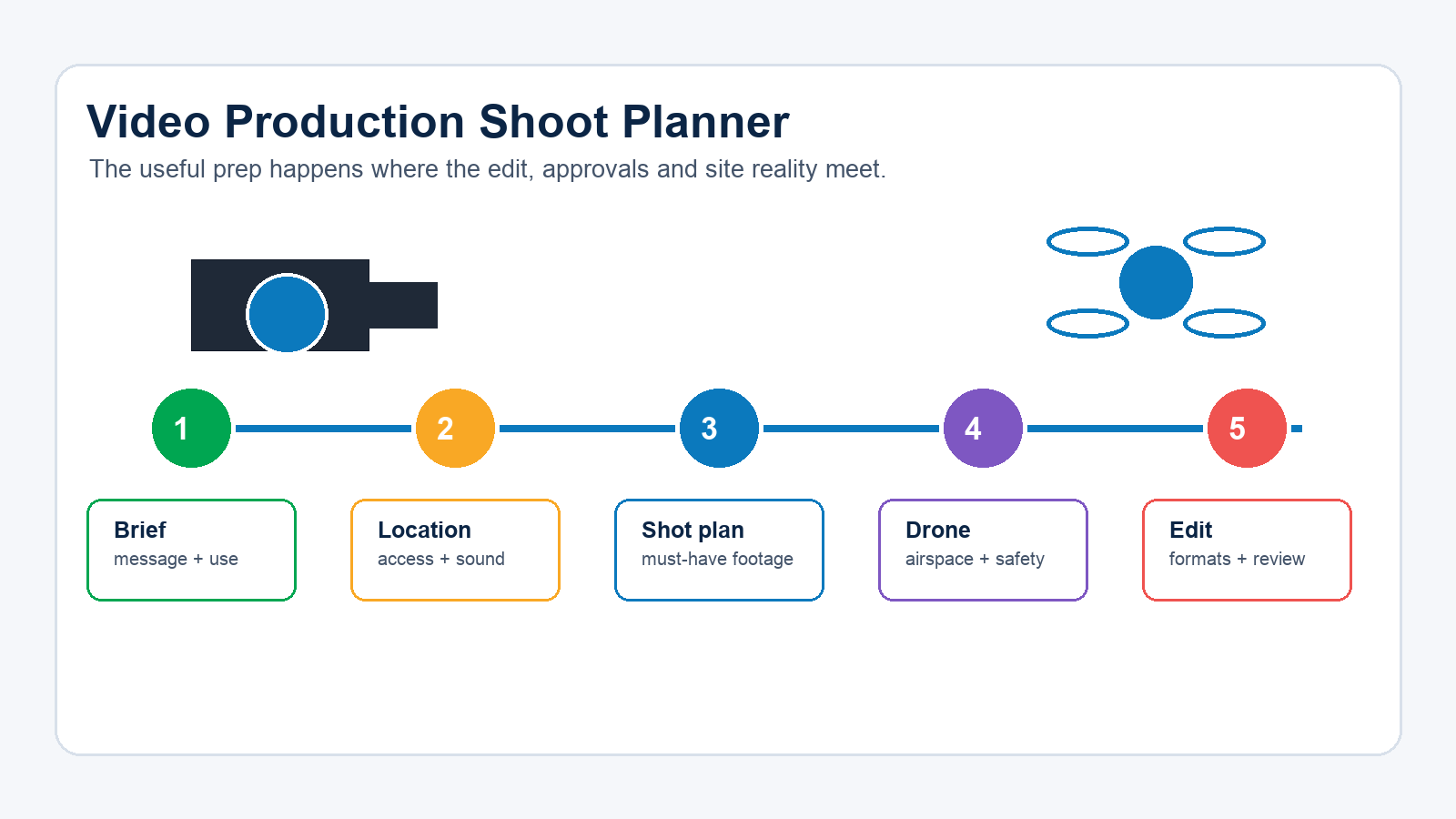
For Brisbane businesses, the useful preparation is practical. Decide where the video will be used, who has approval authority, what must be captured on the day, what the site will allow, and whether aerial footage changes the plan.
HexFlix provides video production in Brisbane, with supporting aerial video and professional photography when a project needs stills and motion assets from one production day.
Start With the Final Edit, Then Plan the Shoot
The best shoot plan starts with the final deliverable. A homepage brand video, a 30-second social ad, a recruitment profile and a real estate walkthrough all need different footage. If that decision waits until after filming, the editor has to make do with whatever was captured.
Before the shoot, confirm the main video length, where it will be published, aspect ratios, caption needs, cutdown versions and deadline. A website video may need a wide horizontal frame. A paid social campaign may need vertical framing and faster visual changes. A conference screen may need safe margins for text.
This is where many businesses lose time. They plan the shoot as an event, then discover the deliverables require a different set of shots.
The practical fix is simple. Write the export list first. If the project needs one hero video, three social cutdowns and a vertical reel, the camera team can frame for that from the start. If the export list is unknown, the production day becomes harder to protect.
Location Noise Is a Production Issue, Not a Minor Detail
A location can look excellent and still be poor for video. Air conditioning noise, road traffic, echo, forklift movement, nearby construction and reflective glass can all affect the result.
For interview-heavy shoots, check sound before the crew arrives. A quiet boardroom often works better than the most impressive foyer. If filming needs to happen in an active workspace, choose the times when staff movement and machinery noise are lowest.
For outdoor Brisbane shoots, light and weather matter. Midday sun can create harsh shadows. Wind can affect audio. Storm season can change the plan quickly. A practical shoot schedule should include a backup interior shot or weather option.
Location preparation also affects safety and speed. Clear parking, lift access, loading space, site contacts and power access reduce wasted time. If the crew spends the first hour finding the right person or waiting for a door to open, the shoot loses momentum before the first shot.
Approvals Should Be Decided Before Shoot Day
The slowest person on a shoot is often the person who was not told they needed to approve something. If the business owner, marketing manager, property manager or compliance contact needs to sign off content, name that person before the production date.
Approvals can affect signage, uniforms, customer faces, vehicle plates, confidential documents, site access and claims made in interviews. On industrial or construction sites, approvals may also include inductions, PPE, traffic control or restricted areas.
If people appear clearly on camera, confirm consent requirements before filming. If the location is leased, confirm whether the tenant, building manager or landlord needs to approve filming.
A Useful Shot List Is Built Around Proof
Generic shots make generic videos. A better shot list captures proof of the business doing the work.
For a service business, proof might be the crew preparing equipment, the team solving a site problem, the finished result, a client handover or a process that shows care. For a property or construction project, proof might be access, scale, location, progress, before-and-after context or detail shots that show quality.
The shot list should separate must-have footage from nice-to-have footage. Must-have shots protect the edit. Nice-to-have shots add polish if time, weather and access allow.
The useful test is whether the shot answers a viewer question. If a buyer wants to know what the site looks like, show the site. If they want to know how the service works, show the process. If they need confidence in the team, show people doing real work.
Drone Footage Changes the Production Plan
Drone footage is not just another camera angle. It changes the schedule because airspace, weather, take-off points, people, vehicles, trees, powerlines and property permissions all matter.
If the video needs aerial footage, confirm the exact address, required view lines, safest launch area, time of day and any sensitive areas that should not be filmed. For commercial drone work, CASA says business drones must be registered, and operators may need the right accreditation, licence or approvals depending on the job. CASA’s drone registration requirements explain the baseline rules for business use.
Aerial footage works best when it has a purpose. It can establish location, show scale, reveal access, track movement or connect a property to nearby features. Random aerial shots look expensive but may not help the story.
Interview Prep Should Keep People Natural
Most people do not need a script. They need to know the question, the point and the audience. A memorised answer often sounds stiff, while a guided answer can feel more credible.
Give speakers the topic areas before the shoot. Ask them to prepare examples rather than exact wording. The best answers usually mention a real problem, the process used to solve it and what changed for the client.
Avoid unsupported claims. If someone says “we are the best” or “we guarantee”, the editor may need to remove it later. Stronger claims are usually more specific, such as describing licences, process, response time, service area or project experience that can be backed up.
Brand Assets Should Arrive Before Editing Starts
The edit slows down when logos, colours, lower-third names, web addresses or legal lines arrive after the first cut. Send brand files before the shoot or immediately after.
The production team should also know if the final video needs captions, music restrictions, supplied voiceover, client logos, project names, privacy restrictions or usage limitations. These details affect the edit from the first timeline, not only the export.
What To Ask HexFlix Before Booking
Ask what can be captured in one production day, what footage is needed for the final deliverables, whether drone filming is practical at the location, what access constraints may affect the shoot, and what the approval path should look like.
If the project also needs still images, planning photography and video together can save time on site. It also keeps lighting, framing and brand style more consistent.
For commercial projects, contact HexFlix about video production in Brisbane or use the contact page to brief the team.
A Brisbane Video Shoot Brief Should Name the Constraints
A useful video brief does not need to be long. It needs to name the constraints that affect production. Those constraints are usually location access, available people, operating hours, noise, safety requirements, weather exposure, drone permission and approval timing.
For example, a warehouse shoot may need to work around deliveries and forklifts. A construction shoot may need PPE, induction and restricted-area planning. A property shoot may need sunlight, tenant approval and clean access. A corporate interview may need quiet rooms, controlled lighting and enough time for the speaker to settle.
When these details are confirmed early, the production team can spend the day capturing useful footage instead of solving avoidable logistics.
One Shoot Can Create Several Useful Assets
A business video shoot does not need to produce only one finished video. With the right plan, the same production window can capture a website video, short social edits, still images, staff portraits, aerial establishing shots and behind-the-scenes material.
This only works if the deliverables are planned before filming. If vertical social edits are needed, the camera team can protect framing for that. If website stills are needed, the crew can set aside time for clean images rather than pulling frames from video later. If drone footage is needed, the flight can be scheduled around light, wind and site access.
For many Brisbane businesses, this is where production planning creates value. The shoot day is already the expensive part. A clear deliverables list helps the business get more useful assets from the same time on site.
FAQs
What should a business prepare before a video shoot?
Prepare the final deliverables, location access, approval contact, must-have shots, interview speakers, brand assets and any drone requirements.
Do we need a full script?
Not always. Interviews often work better with prepared topics and natural answers. Scripted sections are useful when exact wording matters.
Can drone footage be included?
Yes, when the location, airspace, weather and permissions allow it. Commercial drone filming needs the right operator and planning.
How do we avoid delays on shoot day?
Confirm parking, access, people, approvals, quiet spaces and site restrictions before the crew arrives.
Should we capture photography on the same day?
Often yes. If the setup, people and location are already ready, still photography can create useful web and social assets from the same production window.

Leave a Reply
Want to join the discussion?Feel free to contribute!